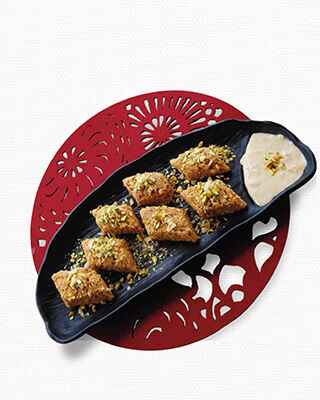
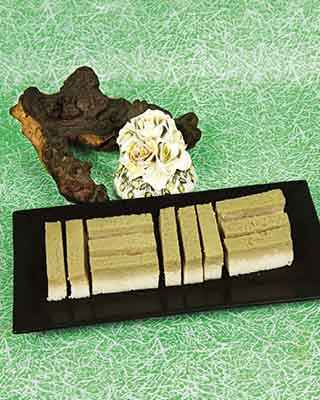
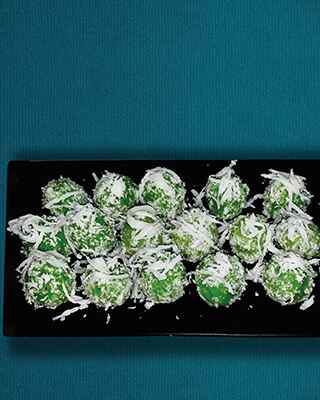
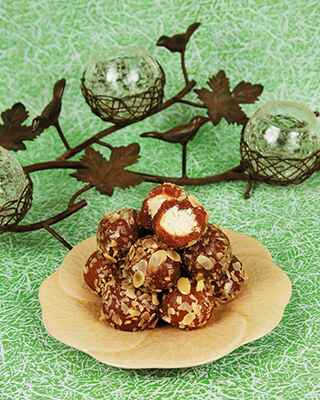
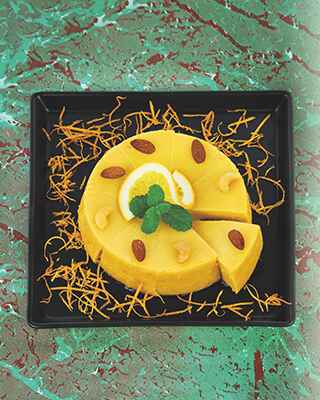
Dessert or Sweet endings is a course that concludes a meal. The word “dessert” originated from the French word desservir, meaning “to clear the table”. Dried fruit and honey were probably the first sweeteners used in most of the world.
Fresh fruit is also considered a dessert nowadays.
Here I am sharing some desserts that I have created and some that I tasted while travelling—and where possible, I’ve added my fusion with a Bangladeshi touch. Coconut is my favourite, and you will find it in most of my desserts. I hope you will enjoy these.
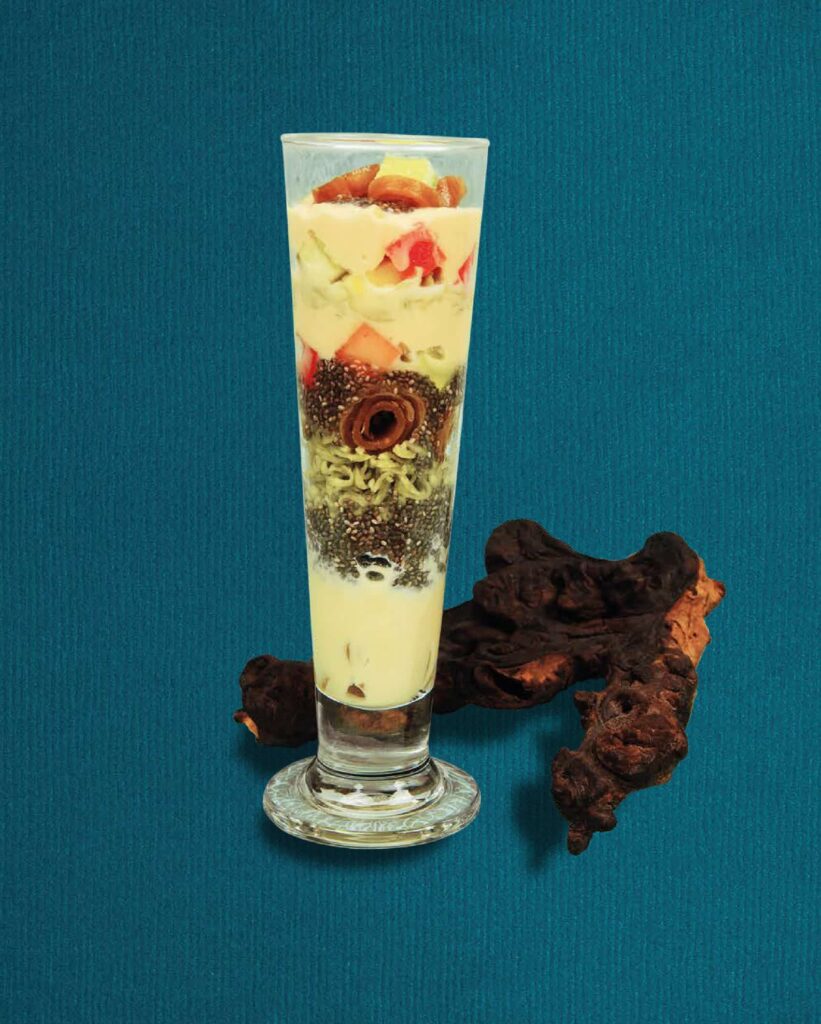
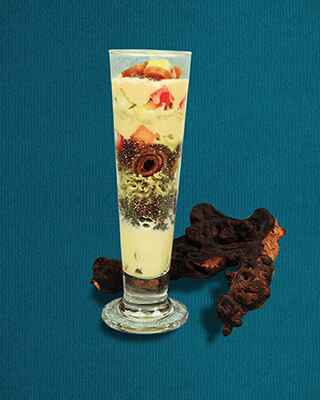
FALUDA, MY STYLE
আমসত্ত ও তোকমা ফালুদা
5/5
SERVES
4
PREPARATION
40Mins
1 cup water 50 g jello fruit dessert powder, any flavour 2 tablespoons chia seeds 1 can (354 ml) of evaporated milk ¼ cup white sugar 1 teaspoon rose water 150 g boiled Japanese green tea noodles ¼ cup mango puree Amshoktow/dry mango fruit leather, as much as needed (page 348) 5-6 pistachios, roughly chopped 5-6 almonds, roughly chopped
DETAILS :
JELLO: Heat 1 cup of water until lukewarm. Remove from the heat and add to the jello powder, mix and stir until it dissolves. Pour the mixture into a mould and chill in the refrigerator until firm. To unmould it, loosen the edges with a knife. Place a serving dish over the mould and turn it upside down. Shake the mould gently and remove the Jello. Chill in the refrigerator.
FALUDA: In a small bowl, soak the chia seeds for 2 minutes. Drain and set aside.
CUT the Jello into small square pieces.
CHILL 2 tall glasses in the refrigerator.
IN a pot, combine evaporated milk and sugar, and cook on low heat until the sugar has dissolved. Add rose water. Remove from heat and let cool. Keep in the refrigerator.
ARRANGE faluda in the glasses step by step as desired. Sprinkle with nuts.
Note: Sweetness will depend on the mango puree. Otherwise, the faluda will taste bland.